
Best Collection of Hilarious Riddles for All Ages
Why Riddles Are the Perfect Blend of Fun and Brainpower
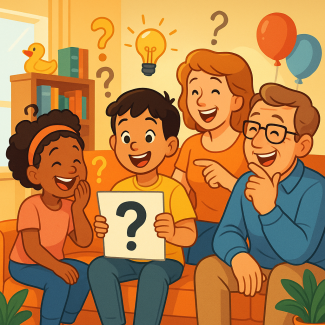
Riddles have been delighting people for centuries. They are not just playful puzzles, but tools that stimulate the imagination, enhance cognitive skills, and bridge generations. Whether you're sitting around a campfire, killing time during a car ride, or looking for classroom icebreakers, riddles offer a brilliant way to connect and laugh together.
In this article, you’ll find a carefully curated collection of funny riddles perfect for both kids and adults. They range from silly and easy to clever and surprising. These riddles not only entertain but also encourage critical thinking—without ever feeling like a chore.
The Benefits of Solving Riddles
Riddles do more than make you chuckle. They:
- Boost problem-solving skills
- Enhance vocabulary and language comprehension
- Develop lateral thinking
- Promote social interaction and shared laughter
Most importantly, they’re just plain fun!
Tips for Sharing Riddles With Kids
When telling riddles to kids, make sure to:
- Choose age-appropriate riddles
- Allow time for them to think before answering
- Celebrate their efforts, even if the answer is wrong
- Encourage them to come up with their own riddles
Now, let’s jump into the most entertaining and funny riddles for all ages!
10+ Funny Riddles for Kids (With Answers)
These child-friendly riddles are perfect for ages 5–12. They’re short, silly, and simple enough for young minds to enjoy.
- What has hands but can’t clap?
A clock. - Why did the student eat his homework?
Because the teacher told him it was a piece of cake! - What has a face and two hands but no arms or legs?
A clock. - Why did the teddy bear say no to dessert?
Because he was stuffed! - What kind of tree fits in your hand?
A palm tree. - Why don’t eggs tell jokes?
Because they’d crack each other up! - What gets wetter the more it dries?
A towel. - What has one eye but can’t see?
A needle. - Why did the banana go to the doctor?
Because it wasn’t peeling well! - What has ears but cannot hear?
A cornfield. - Why did the bicycle fall over?
Because it was two-tired!
Funny Riddles That Adults Will Enjoy
These riddles are still light-hearted but may take a bit more thinking. Perfect for parties, family game nights, or your next group chat.
- What comes once in a minute, twice in a moment, but never in a thousand years?
The letter M. - I speak without a mouth and hear without ears. I have no body, but I come alive with the wind. What am I?
An echo. - What can travel around the world while staying in the same corner?
A stamp. - What has many keys but can’t open a single lock?
A piano. - The more you take, the more you leave behind. What am I?
Footsteps. - What is so fragile that saying its name breaks it?
Silence. - What gets bigger the more you take away?
A hole. - What has a head, a tail, is brown, and has no legs?
A penny. - Forward I am heavy, but backward I am not. What am I?
The word "ton." - I have branches but no fruit, trunk, or leaves. What am I?
A bank.
Brain-Tickling Riddles for Families to Solve Together
Solving riddles as a group can be a great way to bond. These riddles sit between the kiddie silliness and adult complexity, making them perfect for family nights.
- What begins with T, ends with T, and has T in it?
A teapot. - What comes down but never goes up?
Rain. - If you drop me I’m sure to crack, but give me a smile and I’ll always smile back. What am I?
A mirror. - What has legs but doesn’t walk?
A table. - What can you catch but not throw?
A cold. - What belongs to you but other people use it more than you do?
Your name. - I’m tall when I’m young and short when I’m old. What am I?
A candle.
How to Make Riddles Even More Fun
Here are a few creative ways to take riddle fun to the next level:
- Riddle treasure hunts – Hide clues around the house and make solving each riddle lead to the next.
- Riddle of the day – Start mornings with one riddle at breakfast.
- Riddle contests – Challenge family members to invent their own.
- Use props – Act out the riddle or give visual hints for younger kids.
Riddle Games for Classrooms and Parties
In educational or party settings, riddles can:
- Serve as icebreakers
- Be used for team challenges
- Encourage group collaboration
- Help children practice inference and reasoning
Split into teams and keep score, or let riddles flow freely in a circle. Either way, the goal is fun and laughter.
Funny Riddle Categories to Explore Further
Want to build your own collection of riddles? Here are some fun categories:
- Animal riddles ("What has four legs in the morning...")
- Food riddles ("What kind of room has no doors or windows? A mushroom!")
- Number riddles
- Wordplay riddles
- Holiday-themed riddles (great for Halloween, Christmas, or Easter)
Create Your Own Riddles: A Fun Family Activity
Try crafting your own riddles with your kids. Here’s how:
- Start with the answer first
- Think of characteristics or qualities of that item
- Use humor, misdirection, or double meanings
Example: If your answer is "socks," brainstorm things about them—warm, come in pairs, go missing. Then build a riddle:
"I come in twos, but one always hides. I keep your toes warm—what am I?"
Why We Love Riddles
From goofy giggles to satisfying "aha!" moments, riddles offer timeless joy. They invite everyone—regardless of age—to take part in a playful mental challenge. Whether you're 7 or 70, there's nothing quite like cracking a clever riddle and sharing that laugh with someone else.
So next time you find yourself with a few minutes to spare, throw out a riddle and see who bites. You might be surprised by how fun and addictive they can be.
Now it’s your turn—how many of these riddles can you remember and share? Let the laughter begin!