
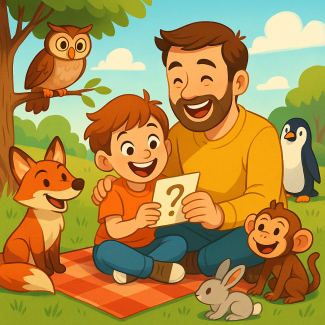
Animal riddles for kids and adults to enjoy together
Discover the most delightful animal riddles to challenge and entertain your whole family
When it comes to clever, laugh-out-loud fun for all ages, few things match the timeless appeal of animal riddles. Whether you're on a road trip, gathered around the dinner table, or looking for screen-free entertainment on a rainy afternoon, riddles offer a rare kind of joy: they’re both brain-teasing and downright silly. Animal-themed ones, in particular, bring out the best of both worlds—sparking curiosity while drawing on our love of nature and the creatures that inhabit it.
In this article, we’ll explore why riddles about animals have remained popular across generations, how they tap into childhood wonder and adult wit alike, and how they can help build cognitive skills while deepening bonds between family members. If you're seeking fun animal riddles for family game night, a classroom activity, or even just to stump your partner on a walk in the park, you're in the right place.
Why animal riddles are perfect for family bonding
How animal-themed riddles bring generations together through laughter and logic
The secret to the enduring popularity of riddles about animals is simple: they’re universal. Nearly everyone, from toddlers to grandparents, has a favorite animal or a fun fact tucked away about the natural world. This shared frame of reference makes animal riddles ideal for bridging age gaps. They’re easy to understand, but often tricky to solve—making them both inclusive and challenging.
More than just entertainment, animal riddles spark:
- Creative thinking, by encouraging unusual associations (e.g., “What has four legs, a shell, and moves slower than your Wi-Fi?”)
- Verbal reasoning, as players must interpret clues, metaphors, and puns
- Laughter, often at unexpected answers or the wild guesses made along the way
- Empathy and curiosity, through imaginative takes on animal behaviors or characteristics
Family game time often leans on board games, but animal riddles add spontaneity. They require no setup, no scorekeeping, and no competitive edge. Instead, they create moments of shared delight—the kind that turns into lasting memories.
Educational benefits of animal riddles for children
Why animal riddles help improve critical thinking and vocabulary in kids
For children, solving riddles is more than fun—it’s a mini workout for the brain. With animal riddles for kids, the learning sneaks in through laughter. These clever questions naturally build language skills, especially as kids experiment with rhymes, wordplay, and double meanings.
Here’s what makes animal riddles for children so powerful:
- They enhance comprehension by requiring kids to hold multiple ideas in mind at once
- They build vocabulary, especially when riddles introduce unusual animals or descriptive words
- They foster confidence, as children learn to solve them independently or contribute to group guessing
Educators often use riddles in classrooms for these very reasons. And animal themes make them even more engaging—who wouldn’t be intrigued by a creature that “hops but doesn’t have knees”?
Best settings to enjoy animal riddles as a family
When and where to use animal riddles to keep everyone engaged
The beauty of animal riddles is that they’re portable and adaptable. You don’t need a device, props, or even a book—you just need a question and a little imagination. Here are some of the best times to bring them out:
- During car rides, especially long ones: riddles break the monotony without relying on screens
- At bedtime, as a playful wind-down after a story
- At the dinner table, replacing the typical “how was your day” with a riddle challenge
- While walking or hiking, where kids can connect riddles to animals they see or imagine
- During playdates or parties, as quick ice-breakers
Even better, animal riddles for adults and kids don’t need to be separated into two lists. The best ones can be solved by either—or both—depending on how they’re delivered. Adults may catch a play on words that a child doesn’t, and kids may guess an answer purely through instinct or association. The back-and-forth becomes part of the magic.
Why readers love riddles about animals
Emotional joy, imaginative play, and the universal appeal of nature-based puzzles
There’s something irresistibly charming about an animal riddle. Maybe it’s the imagery—an owl that asks questions, a cat that tells secrets, a kangaroo with a hidden punchline. Or maybe it’s the simple delight of playing with language in a way that celebrates the natural world.
Animal riddles tap into our imagination, but they also ground us. They remind us of the creatures we know, the ones we’ve seen at the zoo, read about in books, or watched in documentaries. They’re familiar enough to be accessible, but strange enough to be endlessly fascinating.
They’re also deeply human. In a world where many forms of entertainment are passive, riddles ask us to engage. They prompt us to think, to guess, to be wrong—and to laugh about it. That blend of thought and humor is rare and deeply rewarding.
In short, riddles about animals offer:
- Connection across generations
- Brain-boosting benefits
- Laughter and bonding
- A love letter to the natural world
Whether you're a parent looking for a screen-free activity, a teacher crafting a fun classroom break, or simply someone who enjoys clever wordplay, animal riddles are a treasure trove of wholesome entertainment.
What’s the funniest animal riddle you’ve ever heard—or made up? Share it with a friend, your child, or even someone who thinks they’ve “heard them all.” You might just surprise them.
25 riddles about animals with answers for kids and families
These animal riddles with answers are perfect for family game nights, classroom fun, or any moment that calls for quick, clever entertainment. They're crafted to be suitable for both kids and adults—simple enough to understand, but challenging enough to make you think twice. This collection blends classic structure with original twists, making each riddle a miniature puzzle packed with personality.
- I hang upside down in the cave all day,
At night I fly and hunt my prey.
What am I?
Answer: A bat - I march in a line, I carry much weight,
I’m tiny, but teamwork is truly my trait.
What am I?
Answer: An ant - I live in the sea, I squirt out ink,
With eight long arms, I really make you think.
What am I?
Answer: An octopus - I wear a tuxedo but don’t go to balls,
I waddle on ice and make loud calls.
What am I?
Answer: A penguin - I have a pouch to carry my child,
I hop around both tame and wild.
What am I?
Answer: A kangaroo - I don’t have wings but I can glide,
I climb up trees and then I slide.
What am I?
Answer: A flying squirrel - I’m striped and wild, I’m not a horse,
You’ll find me on a safari course.
What am I?
Answer: A zebra - I’ve got sharp teeth and live in the Nile,
When I snap my jaws, I do it with style.
What am I?
Answer: A crocodile - I spin my home, it’s silky and fine,
You may not see me—I sneak and dine.
What am I?
Answer: A spider - I swim with grace and bark with sound,
At circuses or oceans, I’m often found.
What am I?
Answer: A seal - I slither and hiss, I don’t have legs,
You’ll find me near rocks or hidden in dregs.
What am I?
Answer: A snake - I moo in the fields and give you milk,
My skin is smooth—not covered in silk.
What am I?
Answer: A cow - I’m pink and round, I snort with glee,
Roll me in mud and I’m as happy as can be.
What am I?
Answer: A pig - I’m black and white and love bamboo,
My look is rare and my moves are few.
What am I?
Answer: A panda - I pounce and growl, I stalk at night,
My fur is orange with stripes of fright.
What am I?
Answer: A tiger - I have long ears and a fluffy tail,
Hop through gardens without a trail.
What am I?
Answer: A rabbit - I chirp at dawn and build a nest,
Of all the singers, I sing best.
What am I?
Answer: A bird - I howl at the moon but I’m not a ghost,
I run in packs and love the coast.
What am I?
Answer: A wolf - I live in the sea and have no bones,
I sting with tentacles, not with stones.
What am I?
Answer: A jellyfish - I carry a house, but I’m not a snail,
I walk sideways without fail.
What am I?
Answer: A crab - I buzz around and make sweet gold,
I work in hives and fear the cold.
What am I?
Answer: A bee - I gallop fast and wear no shoes,
I whinny loud and read no news.
What am I?
Answer: A horse - I hang from trees and eat with care,
I’m super slow, but I’m always there.
What am I?
Answer: A sloth - I’m green and leap, with legs so strong,
I croak a tune, a bumpy song.
What am I?
Answer: A frog - I climb and swing, I eat with toes,
Jungles are where my family grows.
What am I?
Answer: A monkey
Popular animal riddles for family trivia nights
Family trivia nights thrive on a balance of challenge and fun, and riddles about animals provide the perfect bridge between humor and brainpower. These riddles blend factual cues with wordplay, so participants can draw from both logic and life experience. Whether you're using a whiteboard, a quiz app, or just calling out answers from the couch, they bring a sense of shared achievement.
Use these riddles as:
- Warm-up rounds to get kids engaged
- Tie-breakers when scores are close
- Story starters for improv-based games
They also encourage everyone to listen closely—great practice for verbal memory and concentration, especially for younger players.
Mixing riddles with other animal-themed games and activities
Adding animal riddles into your entertainment plan is easy when you combine them with related games. Not only does it extend the activity time, but it also builds connections between different types of learning and play.
Try pairing riddles with:
- Animal charades: Solve a riddle and then act it out.
- Guess-the-sound games: Play an animal sound after a riddle to match clue with call.
- Drawing games: After solving the riddle, each player draws the animal in their own style.
- Fact-match quizzes: Follow each riddle with a true-or-false fact about that animal to deepen knowledge.
These layered games are especially useful in classrooms and group settings, where varied attention spans and skill levels need to be managed. They create dynamic play environments that remain inclusive and educational.
Why animal riddles spark curiosity and creative thinking
The lasting appeal of riddles about animals lies in their ability to combine the concrete with the abstract. Children already associate animals with books, cartoons, and real-life encounters, so riddles act as a springboard—turning something familiar into something mysterious.
Animal riddles:
- Push players to think metaphorically (“Who wears a tuxedo but never dances?”)
- Create narratives with minimal structure
- Offer just enough misdirection to make guessing fun, not frustrating
They also support pattern recognition, which is key in both language development and early math skills. A child who learns to identify the pattern in riddle formats can later apply that same thinking to grammar, rhyming, and even puzzles and logic problems in other subjects.
Animal riddles are more than just fun—they’re flexible tools for education, storytelling, and social bonding. By mixing clever clues with real-world knowledge, they create an experience that’s both intellectually satisfying and emotionally rewarding. Shared laughter, imaginative guessing, and the occasional “aha!” moment build deeper connections than a screen ever could.
Send your favorite riddle to a friend, or challenge your family to create new ones during your next game night—you might be surprised by what they come up with.